





Who Are the Solavellans?
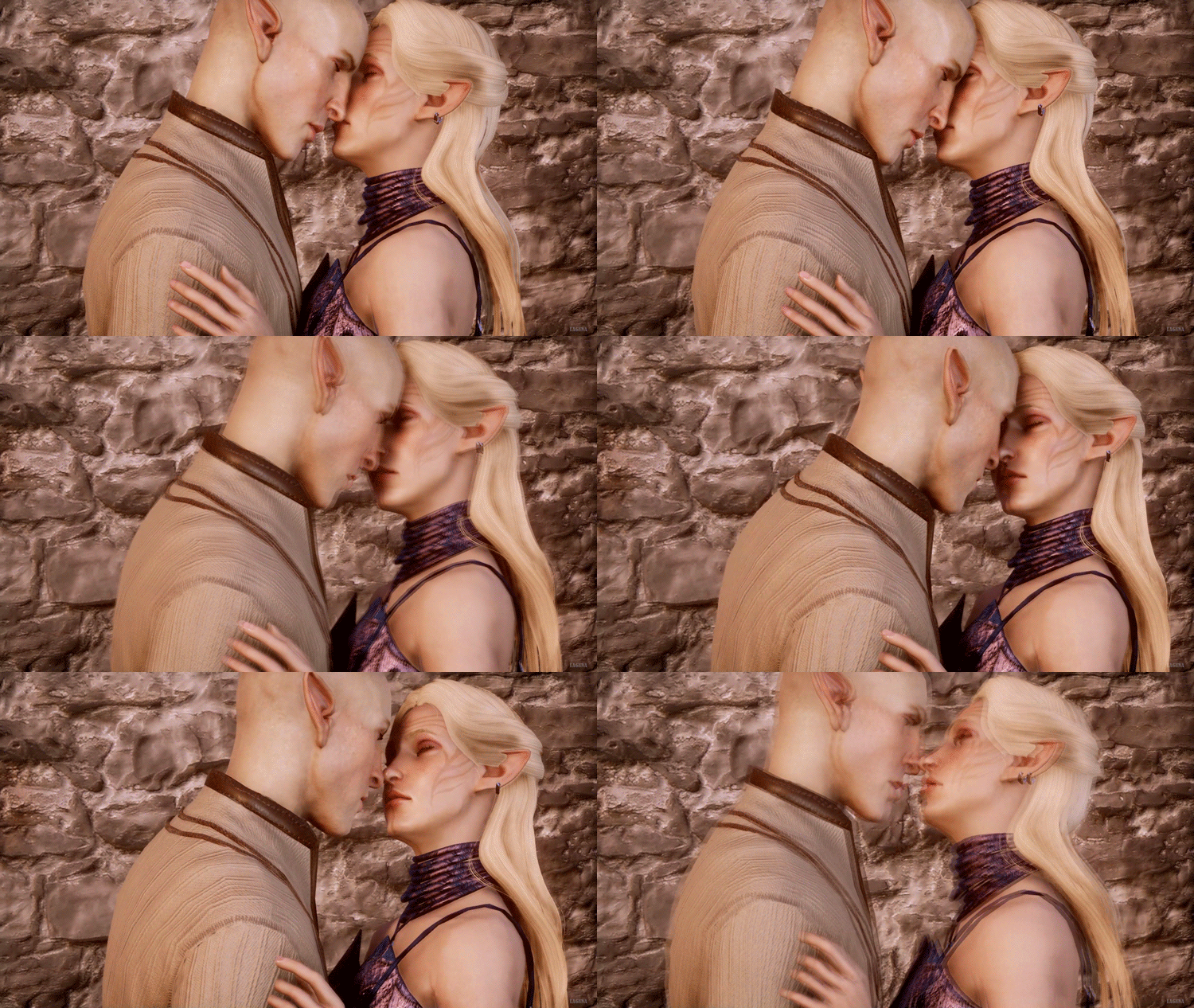
The term “Solavellans” refers to fans of the romantic relationship between Solas, an elven mage and companion in the video game Dragon Age: Inquisition (released in 2014 by BioWare), and the Inquisitor protagonist, specifically an elf character named Lavellan. This pairing, often dubbed “Solavellan,” is a popular “ship” within the Dragon Age fandom. Solas is a complex character a mysterious apostate who later reveals himself as Fen’Harel, the Dread Wolf of elven mythology, and the architect of world-altering events. Lavellan, when romanced by Solas, becomes entwined in a tragic love story marked by his departure at the end of Inquisition and further explored in the Trespasser DLC, where he reaffirms his mission to tear down the Veil (a barrier separating the physical world from the magical Fade), potentially destroying the current world to restore the ancient elven one. Solavellans are those who embrace this bittersweet narrative, often celebrating its depth, emotional resonance, and the philosophical questions it raises about love, duty, and sacrifice.
Why Are They Criticized?
The Solavellan fandom faces criticism from some corners of the Dragon Age community for several reasons:
- Perceived Power Imbalance: Critics argue that the relationship between Solas and Lavellan is inherently unequal. Solas, an ancient elven god with millennia of knowledge, holds significant “soft power” over Lavellan, a younger Dalish elf who begins the game as a relatively inexperienced figure thrust into leadership. Some liken this dynamic to a teacher-student relationship, pointing to Solas’s role as a mentor figure who guides the Inquisitor through the Fade and elven lore. This imbalance, they claim, taints the romance with ethical discomfort, especially given Solas’s secrecy about his true identity and intentions.
- Romanticization of Toxicity: Solas’s actions, lying about his identity, breaking Lavellan’s heart in Crestwood, and pursuing a plan that could kill her and countless others are seen by detractors as manipulative or callous. Critics contend that Solavellans overlook these red flags, romanticizing a dynamic where Solas prioritizes his mission over Lavellan’s well-being, even in Trespasser, where he refuses to let her join him, ostensibly to spare her but also to maintain his resolve.
- Fandom Overzealousness: Some non-Solavellans find the pairing’s vocal fanbase overwhelming, accusing them of elevating Solavellan as the “definitive” or “canon” way to experience Inquisition. This perception stems from the romance’s prominence in fan fiction, art, and discussions, as well as its integration into the game’s lore-heavy narrative, which ties closely to Solas’s role as a central figure in Dragon Age: The Veilguard (released in 2024). Critics argue this enthusiasm drowns out other playstyles or romances, like those with Cullen or Josephine.
- Narrative Dependency: Solavellan’s appeal is tied to its tragedy and ambiguity, Solas leaves, and his fate remains unresolved until Veilguard. Some players dislike this lack of closure or feel it overshadows the Inquisitor’s agency, reducing Lavellan to a pawn in Solas’s story rather than a hero in her own right.
Why Are the Critics Wrong?
While these critiques have merit for some, Solavellan supporters and neutral observers can argue that they miss the mark or oversimplify a nuanced relationship:
- Power Imbalance Misconception: The idea of an exploitative power dynamic doesn’t fully hold when considering Lavellan’s agency. As the Inquisitor, she commands the Inquisition, a powerful organization that Solas, a lone wanderer at the game’s start, relies upon. Far from a helpless student, Lavellan can challenge Solas’s views, shape his approval, and even vow to stop or redeem him in Trespasser. The romance reveals Solas’s vulnerability, his love for Lavellan visibly shakes his resolve, suggesting she holds emotional sway over him, not just the reverse. Critics may exaggerate his godhood; during Inquisition, Solas is weakened, not omnipotent, leveling the playing field.
- Complexity, Not Toxicity: Solavellans don’t deny Solas’s flaws but embrace them as part of a compelling, flawed character. His lies and departure stem from shame and duty, not malice, he believes his plan is the only way to atone for past mistakes. The romance’s tragedy mirrors classic literary pairings (e.g., Anakin and Padmé), where love clashes with destiny. Critics who see only toxicity might overlook how Solas’s choice to leave protects Lavellan from his path’s horrors, as he says, “I would not have you see what I become.” In Veilguard, his eventual softening, potentially reuniting with Lavellan in some endings, shows growth, not indifference.
- Fandom Passion Is a Strength: The fervor of Solavellans reflects the romance’s emotional impact, not a flaw. Dragon Age thrives on player-driven storytelling, and Solavellan’s popularity stems from its integration with the series’ core themes, identity, loss, and moral ambiguity. Critics who decry its dominance might undervalue how role-playing games invite diverse interpretations; Solavellans aren’t forcing a canon but celebrating a narrative that resonates deeply. Other romances, while valid, lack the same lore weight, which naturally amplifies Solavellan’s visibility.
- Agency and Catharsis: Far from diminishing Lavellan, the romance empowers her to confront Solas as an equal in Trespasser and potentially influence his fate in Veilguard. Critics who see her as a victim miss how the story offers closure – whether tragic or redemptive – tailored to player choice. The Solavellan arc isn’t dependency; it’s a test of will, love, and conviction, with Lavellan emerging stronger, not broken.
Conclusion
Solavellans are a passionate subset of Dragon Age fans drawn to a romance that blends heartbreak with cosmic stakes. Critics highlight valid concerns, power dynamics, Solas’s choices, and fandom intensity, but these often misread the relationship’s depth or the agency it affords Lavellan. The critics aren’t entirely wrong to question, but they’re mistaken in dismissing Solavellan as mere flaw or fetish. It’s a messy, beautiful tragedy that thrives on its imperfections rather than despite them, proving that love in Thedas, as elsewhere, defies easy judgment.
 Bisquiet: Gaming, Music, Celebrities, Reviews, and Entertainment News.